Paris · Île de la Cité · Gothic stained glass
Sainte-Chapelle and Conciergerie: tickets, hours and tours
A chapel that is almost all stained glass, and a royal palace that became a prison, side by side on the Île de la Cité. Book your ticket and choose how to visit.
Today
Opening hours for every month are on the Opening hours page.
Checked against the official website on 30 October 2026 · Official source
In short
- One ticket covers both the Sainte-Chapelle and the Conciergerie. The Sainte-Chapelle works with time slots; the Conciergerie you visit before or after, during its opening hours.
- Book ahead. In busy periods the queue can be long, and you may not get in at all without a booking.
- Security checks are strict, because both sites are inside the Palais de Justice. There is no left-luggage, so travel light.
- From October to March the Sainte-Chapelle closes at 5pm while the Conciergerie stays open until 6pm, so in winter visit the chapel first.
The upper chapel: a room made of light
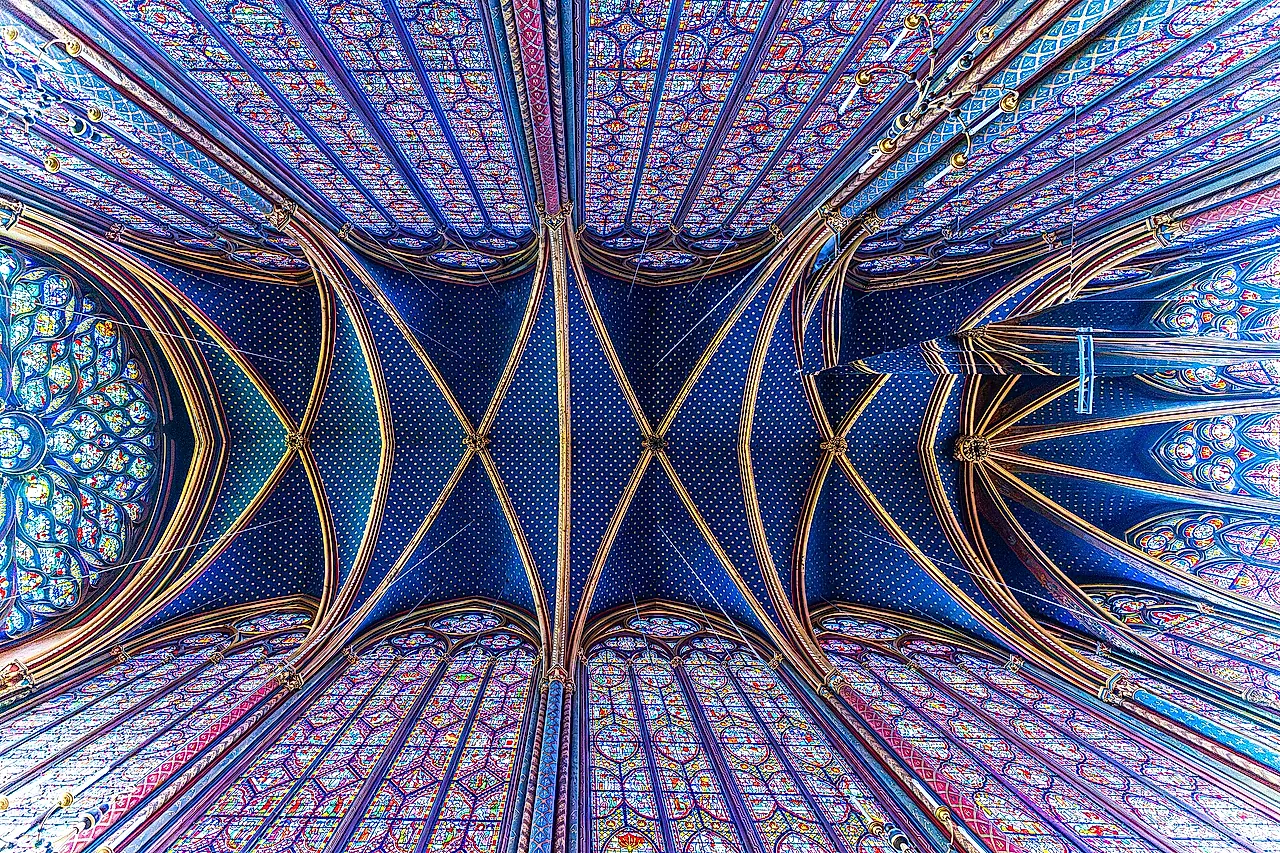
You climb 33 steps, you come out into the upper chapel, and you stop. The walls are almost entirely glass: 15 windows, each 15 metres tall (13 in the apse), with 1,113 scenes from the Old and New Testaments over 670 square metres. Two thirds of the glass is medieval. The story runs from Genesis on the north side to the Apocalypse in the west, like a medieval comic strip. On the last window on the south side you can see the king himself, Louis IX, entering the biblical family tree.
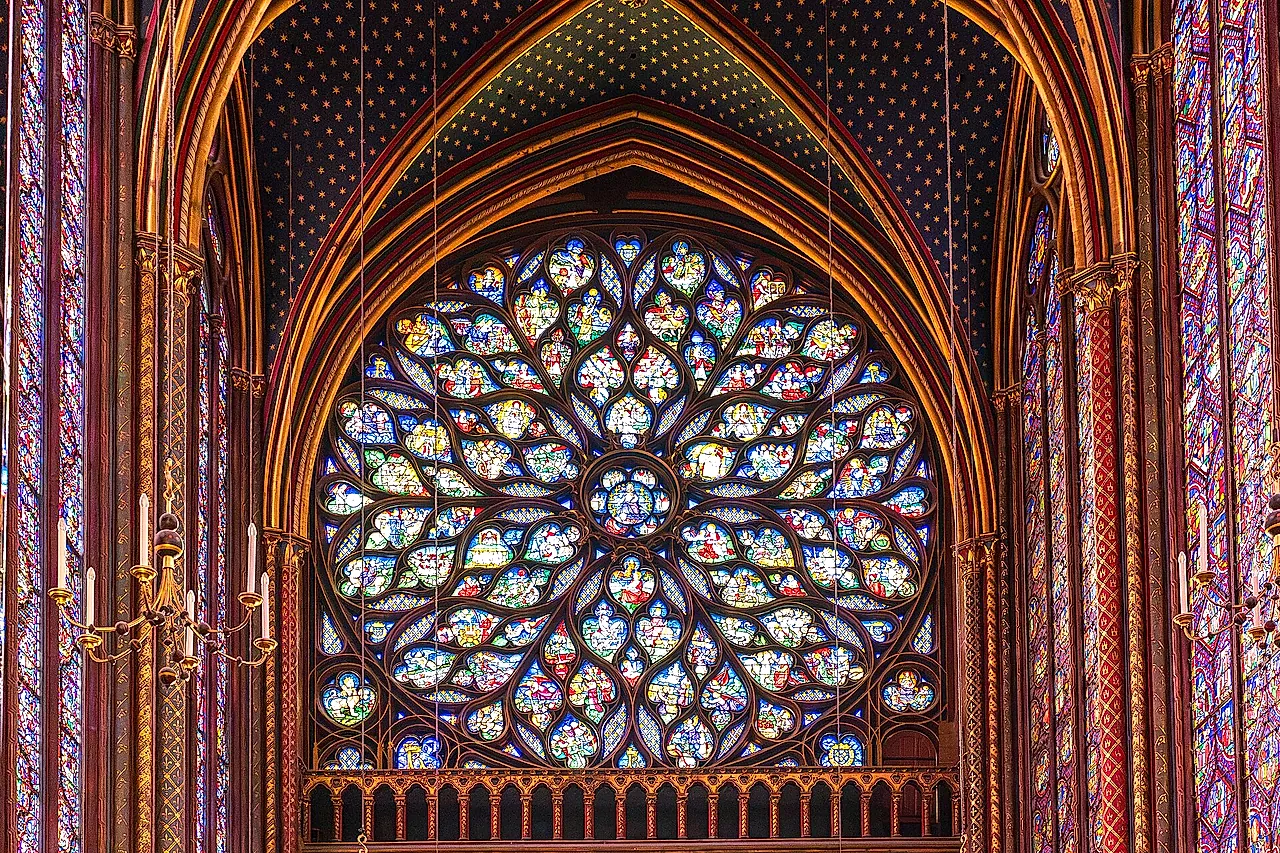
Look at the great rose window of the Apocalypse, 9 metres wide, in the flamboyant Gothic style. It was rebuilt around 1485 under Charles VIII, and its glass is dominated by yellow and green because of the silver stain used. Then look at the columns, which carry more than a hundred different plant motifs, and at the twelve statues of the apostles.
Why a king built a chapel like a jewel box
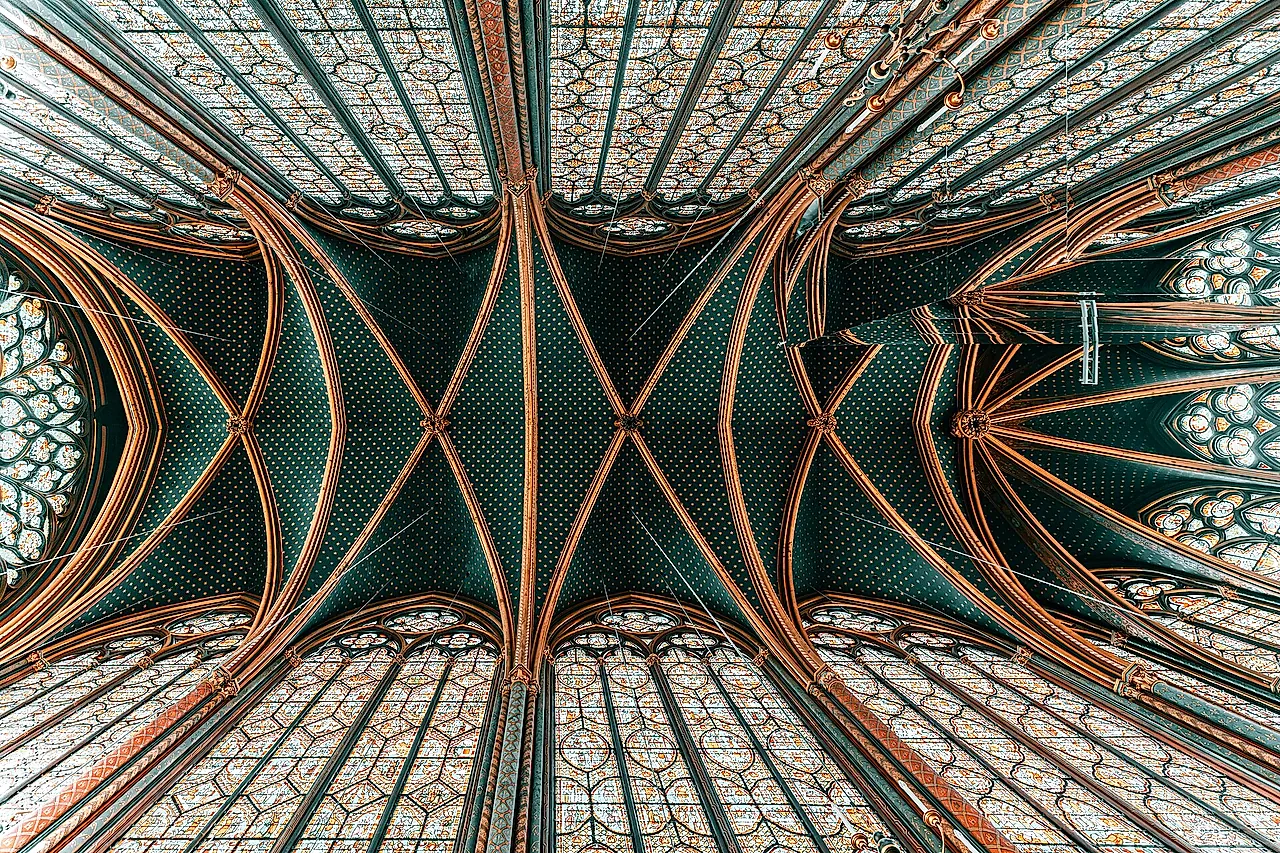
In 1239 Louis IX bought the Crown of Thorns from Baldwin II, the Latin emperor of Constantinople, after two years of negotiations. More relics, 22 in all, including a piece of the True Cross, arrived in 1241. The purchase cost 135,000 livres tournois, half of the kingdom's annual income. The Sainte-Chapelle was built in the middle of the royal palace as its chapel and as a monumental reliquary, in less than seven years. The lower chapel, with 140 capitals decorated with Gothic plants, was for the palace staff.
It nearly did not survive. After fires in 1630 and 1776 and the Revolution, it served as a flour store, then from 1803 to 1838 as an archive for the courts, and the windows were partly walled up, taken down or sold abroad. Public opinion, and people like Victor Hugo, helped save it, and it was restored between 1840 and 1863. The slender spire, 75 metres high, is the fifth one and dates from the 19th century. The Crown of Thorns was saved and in 1806 entered the treasury of Notre-Dame.
The Conciergerie: from royal palace to prison
Next door, the Conciergerie is what remains of the Palais de la Cité, the residence of the kings of France. The Salle des Gens d'Armes, built by Philip the Fair between 1300 and 1314, covers 1,785 square metres and is described as the largest civil Gothic hall in Europe. Between 1,000 and 2,000 servants and soldiers of the king ate here every day. The royal kitchens, from around 1353, have four corner fireplaces.
When Charles V left the palace at the end of the 14th century it became a prison, run by a "concierge", which is where the name comes from. During the Revolution it held more than 500 prisoners and housed the Revolutionary Tribunal, from March 1793 to May 1795. You can see the Women's Courtyard, almost unchanged since then, and the chapel built from 1816 on part of the site of Marie Antoinette's cell. Tablets with 360-degree reconstructions of the medieval palace and the revolutionary prisons help you picture it.
Visitor guide
Paris Tickets: What to Book and How to Choose
How to choose tickets for Versailles, the Eiffel Tower, Orsay, Sainte-Chapelle, the Arc de Triomphe, Seine cruises and day trips from Paris.
Paris in 3 Days: An Itinerary That Really Works
A three-day Paris itinerary built around closing days: Sainte-Chapelle, the Louvre, a Seine cruise, Orsay, the Eiffel Tower and the Arc de Triomphe.
Day Trips from Paris: Versailles, Fontainebleau, Chantilly
Day trips from Paris compared: Versailles, Fontainebleau, Chantilly, Vaux-le-Vicomte and Disneyland, with train times, closing days and tickets.
Getting Around Paris: Airports, Metro and RER
How to get from Charles de Gaulle and Orly to central Paris, which RER goes to Versailles and Disneyland, and how to use the metro for the main sights.
Louvre Visit Guide: Hours, Highlights and Tours
Plan your Louvre visit: opening days and late evenings, what not to miss, what you can bring in, and which guided tour suits your time.